Armenian Gata a Sweet Tradition Worth Tasting

A Taste of Armenian Tradition

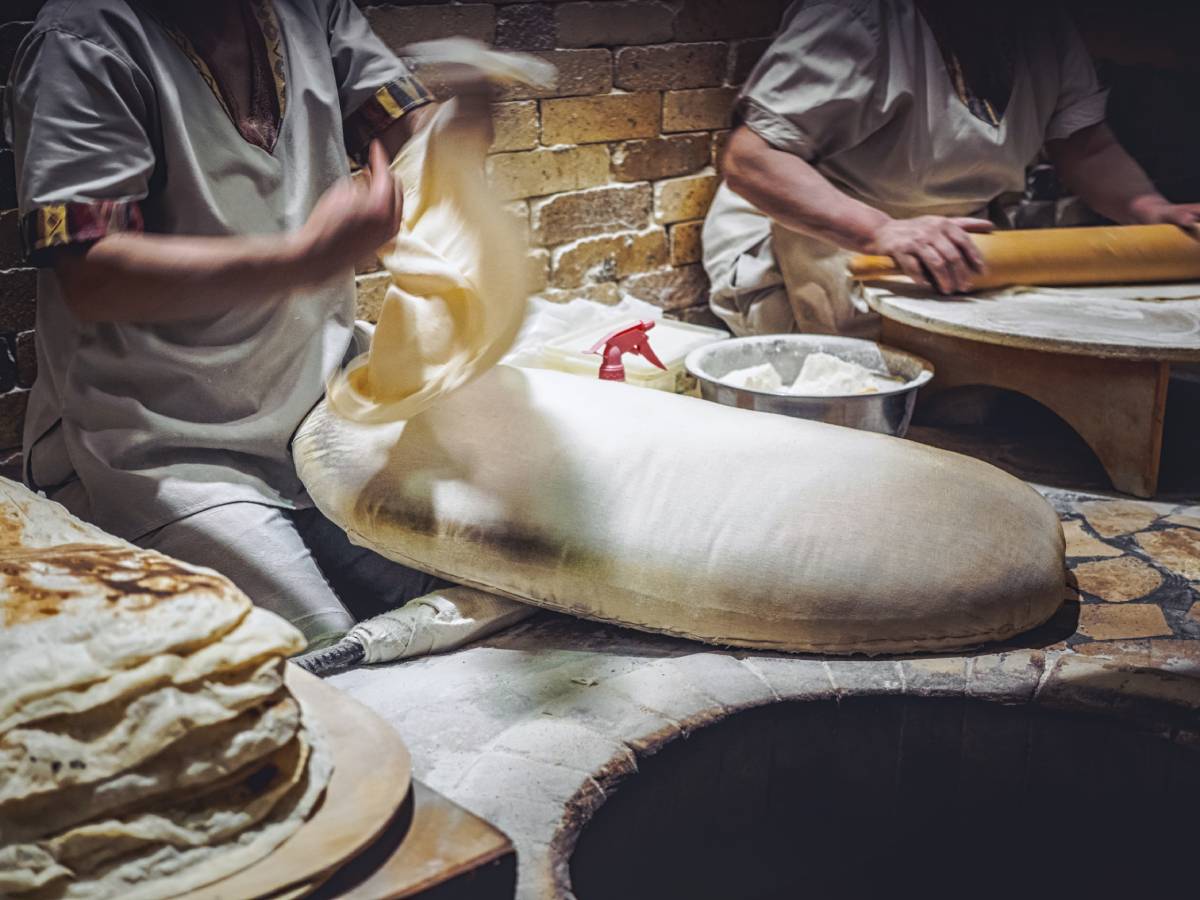
There is a good chance you will meet Armenian gata before you go looking for it. You may see large golden rounds stacked at a roadside stall near Geghard, find smaller pieces in a bakery in Yerevan or be offered a homemade slice with coffee or tea. At first, gata may look like a simple pastry, but there is no single version of it. Recipes, shapes and fillings change from one part of Armenia to another, making gata one of those foods that can taste slightly different each time you try it. Some versions are soft and bread-like, others are more layered or crumbly, but the sweet buttery filling known as khoriz is at the heart of many recipes.


One name many different gatas
Travel around Armenia and you begin to notice just how many forms gata can take. The large decorated round gatas sold around Garni and Geghard are among the versions travelers often encounter, while other regions have their own recipes and ways of preparing the pastry. In Goris, for example, gata can be made as a thick round with a rich walnut filling. This variety is part of its charm: asking where a gata was made can sometimes tell you almost as much as tasting it. And if you find an intricate pattern on top, take a closer look before cutting the first slice. Decoration is part of the craft too.
Armenian Gata (1)
Armenian sweet pastery gata
A Slice of Good Luck
Gata is also connected with an old tradition of hiding a coin inside the pastry on special occasions. Finding it in your slice was considered a sign of good fortune, turning a shared dessert into a small moment of anticipation around the table. Traditions like this help explain why gata is more than simply something to pick up from a bakery. It belongs to family tables, celebrations and memories, and recipes can be passed from one generation to another. Even without the lucky coin, sharing a freshly cut gata still offers visitors an easy and delicious introduction to Armenian food culture.
Learn It, Take It Home
Tasting gata is one way to discover it. Learning to make it yourself is another. Gata-making workshops in Armenia give travelers the chance to prepare the dough, add the sweet filling and learn how the pastry is shaped and decorated. Instead of taking home only photographs or souvenirs, you can take a new skill with you and perhaps make Armenian gata in your own kitchen long after the journey is over. When you return home and bake it for friends or family, a small part of your trip to Armenia comes back to the table.
Armenian sweet
Want to learn how to make Armenian gata yourself?
Join one of our gata-making masterclasses and take a new skill home with you.

Areni-1 Cave Complex: Where Armenia’s Ancient Wine Story Comes to Life

Areni, Armenia  way to Areni   1 cave

Step Inside More Than 6,000 Years of History

Not far from the village of Areni, in the rocky landscape of Vayots Dzor, a cave opens a window into life thousands of years ago. Known as Areni-1 Cave or Bird’s Cave, this archaeological site has revealed traces of people who lived and worked here long before written history. Excavations that began in 2007 uncovered remarkably well-preserved objects and installations, including evidence of wine production dating to around 4000 BC. Today, Areni-1 is one of Armenia’s most fascinating archaeological sites, a place where visitors can stand close to discoveries that changed what we know about the ancient past.

An Ancient Place for Making Wine

One of the cave’s most important discoveries is a wine-production installation dating back about 6,100 years. Archaeologists uncovered a grape-pressing area, a clay basin, large storage vessels and remains of grapes, including seeds and stems. Scientific analysis provided further evidence that wine was produced here during the Chalcolithic period. The discovery is considered the earliest known complete winemaking facility, offering an extraordinary glimpse into how people were processing grapes thousands of years ago. In a region still famous for its vineyards and wine today, the connection between Areni’s landscape and winemaking reaches remarkably far into the past.
wine and ritual area in Areni   1 cave

The 5,500-Year-Old Leather Shoe

Wine was not the cave’s only remarkable discovery. In 2008, archaeologists found a nearly complete leather shoe preserved beneath a ceramic vessel. Made from a single piece of leather and filled with grass, it dates to roughly 3600 BC, making it the oldest known leather shoe discovered to date. The cave’s dry, cool and stable conditions helped preserve organic materials that would normally disappear over thousands of years. Finds such as the shoe, plant remains, textiles and other everyday objects make Areni-1 especially valuable because they reveal not only what ancient people produced, but small details of how they lived.
Chalcolithic leather shoe find site in Areni

More Than an Archaeological Site

A visit to Areni-1 becomes even more interesting because its story continues beyond the cave. The surrounding Vayots Dzor region remains one of Armenia’s best-known wine-producing areas, and vineyards still shape the landscape around Areni today. Inside the cave, however, that modern wine culture suddenly gains a much deeper timeline. Standing near a place where grapes were pressed more than six millennia ago makes Areni-1 more than another stop on a journey through Armenia. It is a rare connection between the country’s prehistoric past and a tradition that is still very much alive today. Ready to discover where Armenia’s ancient wine story comes to life? Explore Areni-1 Cave and discover more of Vayots Dzor with Gavit Travel.
Areni, Armenia
Ready to discover where Armenia’s ancient wine story comes to life?
Explore Areni-1 Cave and discover more of Vayots Dzor with Gavit Travel.

Gosh Lake A Hidden Corner of Dilijan

Gosh lake surrounded by colorful autumn trees in Armenia

Leave the Main Road Behind

Not every place in Dilijan is waiting at the end of an easy road. Gosh Lake lies hidden in the forests of Dilijan National Park, a few kilometres from the village of Gosh. Reaching it usually means leaving the village behind and continuing along forest paths and rough tracks, where the surroundings gradually become quieter. There are no busy attractions waiting at the end — just a small mountain lake surrounded by trees. That sense of being away from the usual route is exactly what makes Gosh Lake worth discovering.

A Small Lake in a Big Forest

Gosh Lake is surprisingly small, measuring roughly 100 metres in length and up to 80 metres in width, with a maximum depth of around eight metres. But numbers say little about the experience of arriving here. Dense forest reaches almost to the water, and the changing seasons completely transform the view. Summer brings deep shades of green, while autumn turns the surrounding trees gold and orange, their colors reflected on the surface of the lake. Unlike the more developed Parz Lake, Gosh has no cafés, boats or organised attractions on its shore. Its appeal comes from what has been left untouched.
green nature and  Gosh Lake

Make the Journey Part of the Experience

For travelers who enjoy walking, the route to Gosh Lake can be as memorable as the destination itself. A marked hiking route connects the lake with Gosh village and Goshavank, passing through woodland, open fields and quieter corners of the national park. The Transcaucasian Trail describes a 4.2-kilometre section between Gosh Lake and Goshavank, while other trails continue through the wider Dilijan landscape. This makes it possible to combine a peaceful forest lake with one of the region’s best-known medieval sites — and experience both without spending the entire day in a car.
green scenery reflecting in the Gosh Lake, Armenia

Find the Quieter Side of Dilijan

Gosh Lake is for travelers who do not mind going a little farther to find somewhere quieter. Come for a walk through the forest, stop beside the water and leave enough time to enjoy the surroundings before heading back toward Gosh. There is little here to distract from the landscape, and that is the point. While many visitors know Dilijan for its town, monasteries and Parz Lake, Gosh Lake offers something different: a simple forest escape that still feels removed from the busiest routes.
Morning fog on the lake Gosh lake.
Ready to go beyond the familiar side of Dilijan?
Follow the forest to Gosh Lake and discover more of Armenia with Gavit Travel.

Discover the Cultural Side of Dilijan

Armenia  Tourist town of Dilijan
Start in Old Dilijan

Dilijan may be famous for its forests and mountain scenery, but there is another side of the town worth discovering. Begin on Sharambeyan Street, one of the best-known corners of Old Dilijan. Here, traditional houses with wooden balconies and carved details recall the character of the town in the 19th century. Today, artisan workshops, galleries and the Tufenkian Old Dilijan Complex bring new life to this historic setting. Take a slow walk along the street, look inside the workshops and you will discover a Dilijan shaped not only by nature, but also by architecture, craftsmanship and local traditions.

Follow the Road to Haghartsin

From the town, the road to Haghartsin Monastery leads through the forests that make Dilijan so distinctive. Hidden among wooded mountains, the monastery complex includes several medieval churches and a remarkable 13th-century refectory. But the journey is as much about the setting as the architecture. The road winds deeper into the forest before the stone monastery appears among the trees, creating one of those places where Dilijan’s nature and history seem to belong together.
Haghartsin is a 13th century monastery located near the town of Dilijan

A Stage in the Heart of Dilijan

Back in the center of town, the Dilijan Amphitheater reveals a more recent chapter of local culture. Its classical arches and columns may look much older, but the present amphitheater was built in 2009, with a Greek-inspired design, as a tribute to Dilijan’s theatrical traditions. Those traditions reach back to the late 19th century, when local residents built an open-air summer theater known as the Rotonda. Today, the amphitheater adds an unexpected architectural stop to a walk through town and reminds visitors that Dilijan has long been a place for culture as well as nature.
Dilijan city, Armenia on sunny day

Find More Than One Dilijan

What makes Dilijan interesting is how quickly one experience turns into another. You can begin among the wooden balconies and workshops of Old Dilijan, follow a forest road to a medieval monastery and return to discover a completely different side of the town around its cultural spaces. None of these places needs to be rushed. Together, they show why Dilijan is more than a gateway to forests and hiking trails — it is a town where nature, history, craftsmanship and culture have all left their mark.
Beautiful view of small lake at Dilijan city park
Ready to see another side of Dilijan?

Discover its streets, stories and cultural landmarks with Gavit Travel.

Parz Lake in the Heart of Dilijan

Parz Lake 4

A Forest Escape in Dilijan

Leave the streets of Dilijan behind and the road to Parz Lake quickly disappears into the forest. Hidden among the wooded mountains of Dilijan National Park, this small lake offers a quiet change of pace from Armenia’s cities and historic landmarks. Its name, Parz, means “clear” in Armenian, a simple name that suits its peaceful setting. The lake can be reached by car, but the journey through the forest is part of the experience, gradually taking you deeper into one of Armenia’s greenest landscapes.

More Than a View of the Lake

Parz Lake is not a place where you need a long list of sights. Walk beside the water, find a place to sit among the trees or simply enjoy the reflections of the surrounding forest on the lake. For visitors looking for something more active, the area also offers paddle boats and a zipline over the water. The atmosphere changes with the seasons: spring and summer bring fresh shades of green, while autumn transforms the surrounding forest into warmer colors. It is an easy place to spend a few hours away from the busier parts of a journey through Armenia.
nature and Clear Lake

Start a Journey on Foot

For hikers, Parz Lake can be the beginning rather than the destination. Forest trails connect the area with Dilijan and continue toward Gosh and Goshavank, allowing travelers to experience a much larger part of Dilijan National Park on foot. One established route between Parz Lake and Dilijan runs for about 13 kilometres through forest and mountain terrain, while another route leads toward Gosh. You do not need to complete a long hike to enjoy the area, but following even part of a forest trail reveals a quieter side of Dilijan beyond the lakeshore.
road during Fall

Make Parz Lake Part of Your Dilijan Journey

Parz Lake works especially well as part of a wider day in Dilijan. Spend the morning exploring the town, follow the forest road to the lake and leave some time to walk beneath the trees before returning. Or make the lake the starting point for a longer hiking adventure through the national park. Whether you come for a peaceful break or to continue deeper into the forest, Parz Lake shows why nature is such an important part of the Dilijan experience.
Dilijan Armenia. A mountain town
Ready to discover Dilijan beyond the town?
Visit Parz Lake and explore Armenia’s green side with Gavit Travel.

Dzoraget River Gorge

Fabulous view of Peg Stone rocky landscape with canyon and Dzoraget river
Where the River Meets the Mountains

Travel through Lori and you will quickly understand why this is known as one of Armenia’s greenest regions. But around Stepanavan, the landscape takes a more dramatic turn. The Dzoraget River enters a deep gorge, with steep rocky slopes rising above the water and open mountain scenery stretching beyond. The river begins in the highlands of northern Armenia and eventually joins the Pambak to form the Debed, connecting some of Lori’s most impressive landscapes along the way. Even its name reflects the setting: in Armenian, dzor means “gorge” and get means “river.”

Discover the Sunrise Canyon

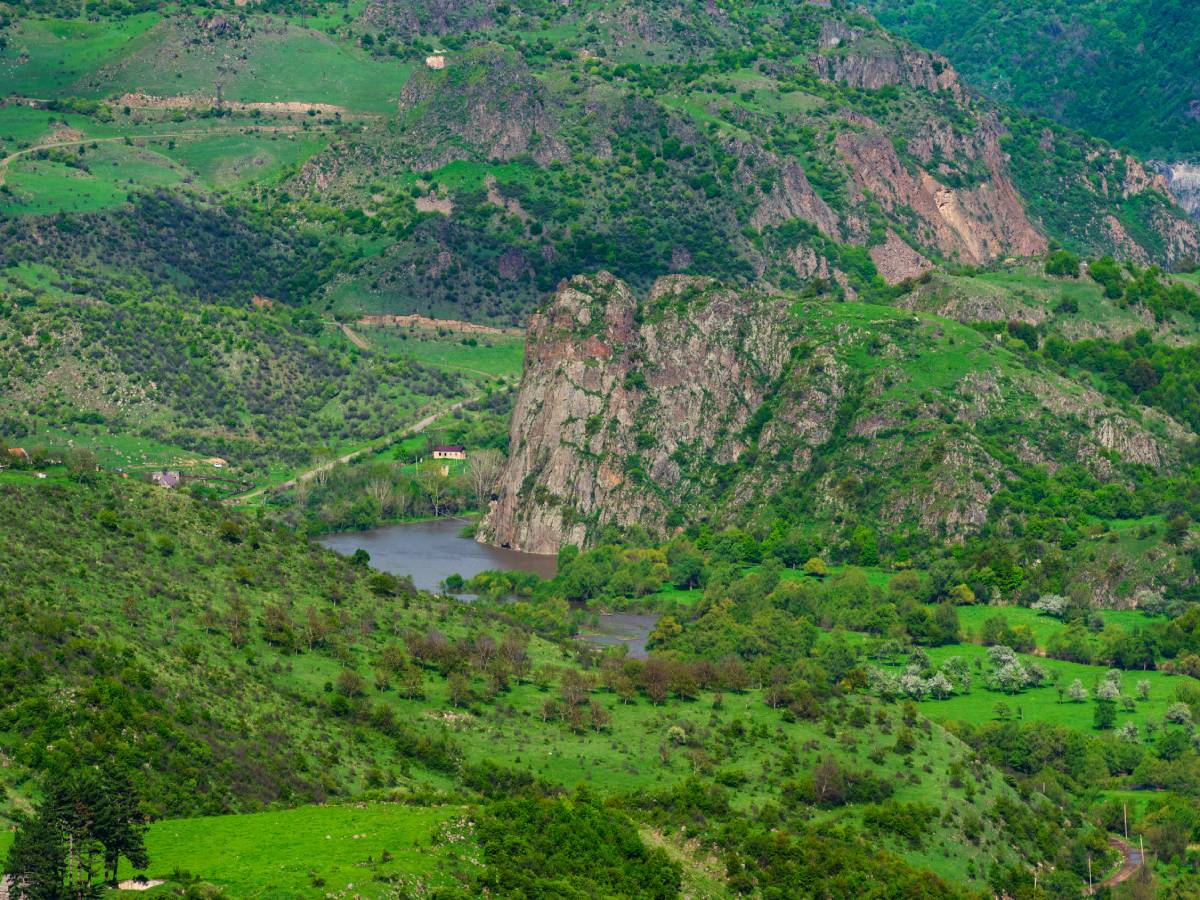
One of the most memorable places along the Dzoraget is Arevatsag Canyon. Its Armenian name, Arevatsag, means “sunrise,” giving this dramatic corner of Lori a name as memorable as the landscape itself. From above, the canyon appears like a deep opening through the green hills, while below, the Dzoraget winds between the slopes. A large rock formation rising above the river adds to the scenery, and hiking routes allow travelers to experience the valley from a completely different perspective. In spring, when the surrounding hills turn bright green, the contrast between rock, river and vegetation is especially beautiful.
Dzoraget canyon in Lori province of Armenia , Arevacagi dzor

Where Nature Became a Fortress

The Dzoraget Gorge is also closely connected with one of Lori’s most fascinating historic sites. Near Stepanavan, Lori Fortress stands on a high plateau beside the river gorge. Founded by David Anhoghin in the early 11th century, Lori grew into an important fortified city and became the center of the medieval Tashir-Dzoraget Kingdom. Its location was no accident: the surrounding gorges created natural defenses around the settlement. Today, parts of its walls and other structures remain, while the open views across the gorge make it easy to see why this place was chosen centuries ago.
Gorgeous landsmark with mountains and Dzoraget river's canyon

Take the Road into Lori

Dzoraget River Gorge is not a place to experience from a single viewpoint. Follow the roads around Stepanavan, look down into the canyon from Lori Fortress or head toward Arevatsag to see another side of the valley. Along the way, forests, rocky cliffs, villages and wide mountain views constantly change the scenery. It is this combination of wild nature and traces of medieval history that makes the Dzoraget area worth adding to a journey through northern Armenia. Ready to discover the landscapes beyond Armenia’s usual routes? Explore Dzoraget River Gorge and more of Lori with Gavit Travel.
Nature landmark with bridge over the Dzoraget river
Ready to discover the landscapes beyond Armenia’s usual routes?

Explore Dzoraget River Gorge and more of Lori with Gavit Travel.

Haghpat and Sanahin

Haghpat Monastery with the surrounding villages
Discover Lori’s UNESCO Heritage

High above the valleys of northern Armenia, Haghpat and Sanahin tell the story of a time when monasteries were much more than places of worship. Developed between the 10th and 13th centuries, these two complexes became important centers of learning, culture and religious life. Today, the Monasteries of Haghpat and Sanahin are listed together as a UNESCO World Heritage Site, offering travelers a chance to experience medieval Armenian architecture surrounded by the green mountains and deep valleys of Lori.

Haghpat Above the Debed Canyon

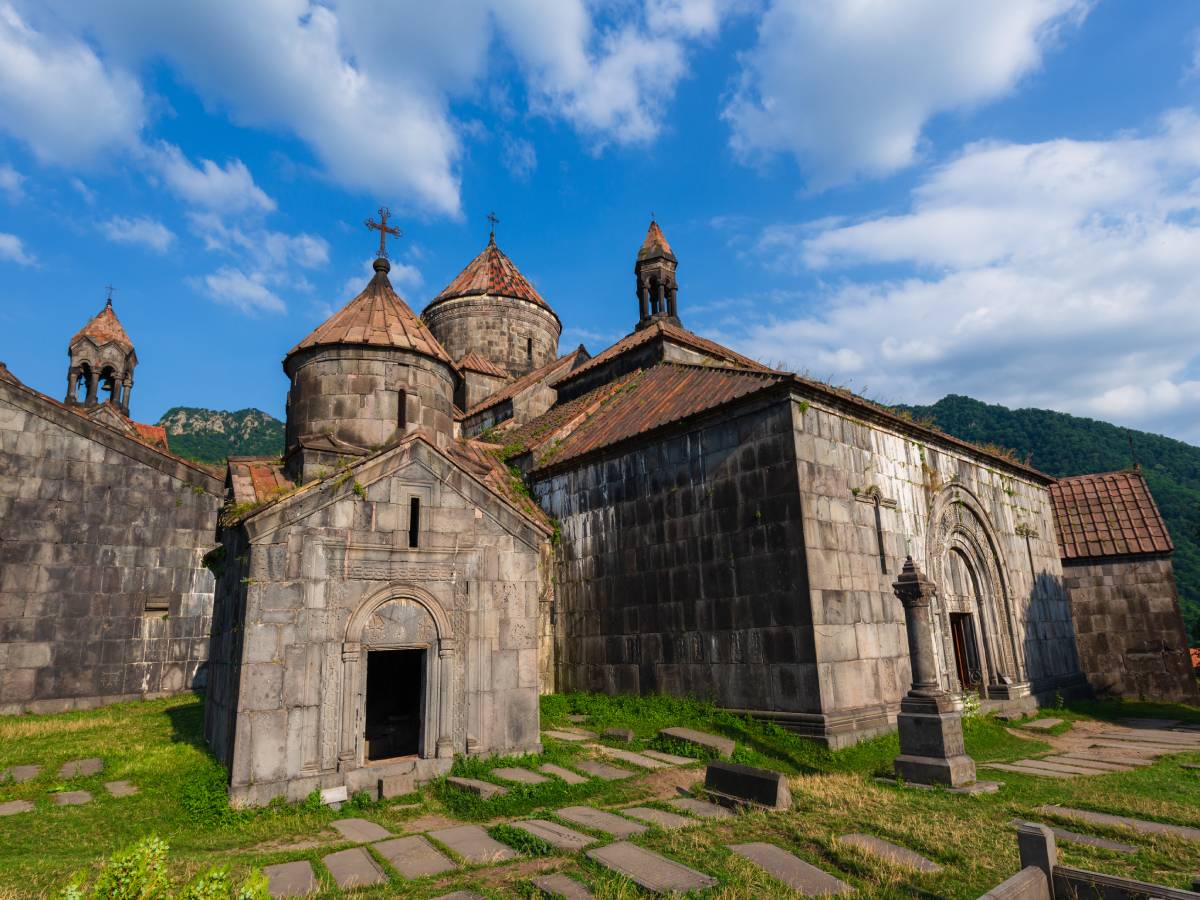
Haghpat Monastery stands on a plateau overlooking the landscape of the Debed Canyon. Founded in the 10th century under the Bagratid royal dynasty, the complex grew over several centuries and includes churches, a bell tower, a refectory, a scriptorium and finely carved khachkars. Haghpat was also an important center of learning and manuscript culture. Yet part of its appeal comes from its setting: stone buildings, green slopes and wide views come together in a place where architecture and landscape feel closely connected.
Haghpat monastery Armenia

Sanahin A Center of Learning

Not far away, Sanahin developed into another major religious and educational center of medieval Armenia. Its complex includes several churches, a library, a bell tower and spaces once connected with teaching and scholarship. Sanahin became particularly known for learning, manuscript work and calligraphy. The monastery also forms part of a wider historic landscape that includes the medieval Sanahin Bridge across the Debed Gorge, creating another connection between Lori’s architecture and its dramatic natural surroundings.
church situated in Sanahin village in Armenia

Beyond Haghpat and Sanahin

Haghpat and Sanahin are only part of Lori’s rich historic landscape. Further along the Debed Canyon, Akhtala Monastery stands out for its medieval architecture and remarkable frescoes, while elsewhere in the region Russian Orthodox churches reflect the presence of Russian communities that settled in northern Armenia. Near Stepanavan, Lori Fortress reveals another chapter of the region’s past. Once an important medieval fortified city, its ruins stand above deep gorges and open mountain landscapes. These places can easily become part of a wider journey through Lori. Start with Haghpat and Sanahin, follow the roads through the Debed Canyon, discover Akhtala and continue toward the landscapes around Stepanavan and Lori Fortress. Together, they show how nature, architecture and centuries of history have shaped one of Armenia’s most distinctive northern regions.
Russian churcհ Lori
Ready to discover the history and landscapes of Lori?
Explore Haghpat, Sanahin and more of northern Armenia with Gavit Travel.

Lori: Armenia’s Green North

Beautiful summer landscape with forest and mountains, Armenia
Discover a Different Side of Armenia

Travel north through Armenia and the landscape begins to change. Mountains become greener, forests cover the hillsides, and rivers cut deep valleys through the region. This is Lori, one of Armenia’s most scenic northern regions and a place where nature, history and small towns come together. The Debed Canyon shapes much of its character, with roads winding between steep slopes, villages and centuries-old monuments. For travelers who want to see a quieter and greener side of Armenia, Lori feels very different from the landscapes around Yerevan and the south.

Where Nature Takes the Lead

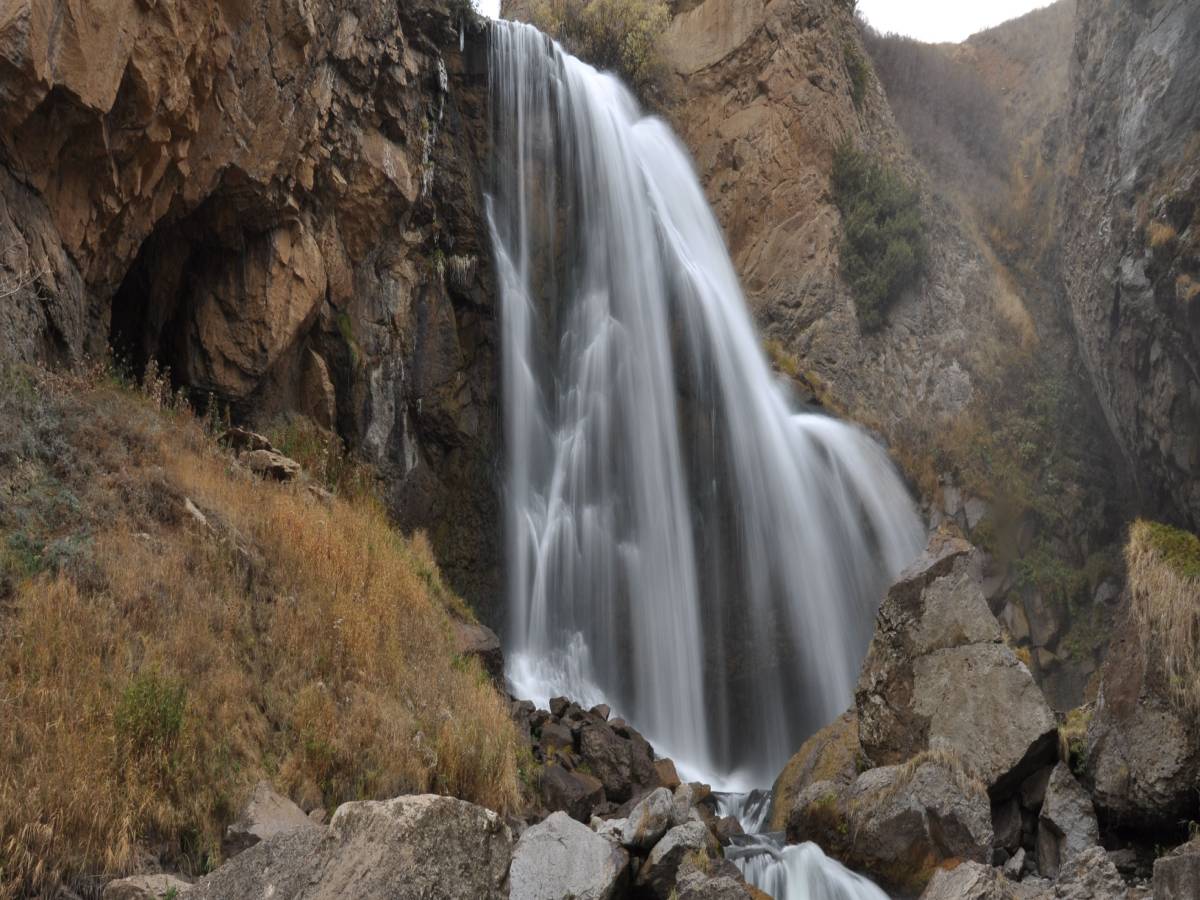
Nature is one of the best reasons to explore Lori. Forested mountains, open meadows, deep gorges and rivers create a landscape that changes with every part of the journey. One of the region’s natural highlights is Trchkan Waterfall, located near the border of Lori and Shirak. The water drops about 23 metres into a rocky gorge, and the surrounding landscape makes the journey there part of the experience. Elsewhere, travelers can explore the forests around Dsegh, discover small mountain lakes or walk among trees from different parts of the world at Stepanavan Dendropark.
view of the Trchkan waterfall

A Region Shaped by History

Lori’s green landscape is also filled with traces of the past. Medieval monasteries and churches appear above valleys, beside villages and along mountain roads. The monasteries of Haghpat and Sanahin, together listed as a UNESCO World Heritage Site, are the best-known examples, while Akhtala, Odzun and Kobayr reveal other chapters of the region’s history. Lori also preserves less expected reminders of the different communities that have lived here over time, including Russian Orthodox churches found in some of the region’s villages. Together, these places make a journey through Lori as much about discovering its cultural landscape as enjoying its nature.
Lotos Lake and Bazum mountains scenic view from Saratovka village (Lori province, Armenia)

Take the Road Through Lori

Lori is best discovered without rushing. Follow the roads through the Debed Canyon, stop in mountain villages, explore Dsegh and the landscapes around it, walk through the forests near Stepanavan or continue towards Lori Fortress. Some places are well known, while others appear almost unexpectedly along the way. That mix of mountains, forests, waterfalls, historic sites and quiet rural landscapes is what makes Lori one of the most rewarding regions to explore in northern Armenia. .
Debed river and foggy mountains
Ready to discover Armenia’s green north?

Explore Lori’s landscapes, history and hidden corners with Gavit Travel.

10 Natural Wonders in Armenia Worth Exploring

Mount Aragats Aparan, Armenia 1
Explore Armenia’s Natural Side

Armenia may be a small country, but its landscapes can change completely within a few hours of travel. One road takes you through dry volcanic hills, another into thick forests, and further south, deep gorges cut through the mountains. Lakes sit high above sea level, waterfalls appear between dark rock walls, and ancient monuments often stand in places where the surrounding nature is just as memorable as the history itself. If you want to discover Armenia beyond its cities, these are ten natural wonders worth adding to your journey.

Are Armenia’s natural attractions easy to reach from Yerevan?

Some, such as Garni Gorge and Lake Sevan, are easy day trips from Yerevan. Others, including Tatev and Shaki Waterfall, require a longer journey.

Which natural places can I combine in one trip?

Symphony of Stones can be combined with Garni and Geghard, while Shaki Waterfall works well with Sisian, Zorats Karer and Tatev.

Is Armenia a good destination for nature lovers?

Yes. Armenia offers mountains, forests, lakes, waterfalls, canyons and volcanic landscapes within relatively short distances.

Can I visit Armenia’s natural attractions without a car?

Some places can be reached by public transport, but a car, transfer or organized tour makes it much easier to explore remote areas.

Which natural places in Armenia are best for photography?

Lake Sevan, Symphony of Stones, Vorotan Gorge, Mount Aragats and Shaki Waterfall offer some of the most memorable landscapes.

Can I combine nature and historical places in Armenia?

Yes. Garni and Geghard can be combined with Symphony of Stones, while Tatev combines a historic monastery with the dramatic Vorotan Gorge.

1. Symphony of Stones

At first sight, the walls of Garni Gorge hardly look natural. Thousands of long basalt columns rise above the Azat River, arranged so neatly that they seem almost designed by hand. This is the Symphony of Stones, one of Armenia’s most unusual geological formations. The columns were created as volcanic lava cooled and contracted over time, leaving behind the shapes visible today. Their organ-like appearance gave the formation its musical name. A visit is easy to combine with nearby Garni Temple and Geghard Monastery, making this one of the best places to experience Armenia’s nature and history in the same day.
Symphony of Stones 2

2. Lake Sevan

Drive east from Yerevan and one of Armenia’s largest landscapes slowly comes into view. Lake Sevan lies about 1,900 metres above sea level and is Armenia’s largest lake. On clear days, its blue water seems to stretch all the way to the surrounding mountains. Walk up the steps of the Sevan Peninsula for wide views across the lake and visit Sevanavank, or travel farther around the shore to discover quieter beaches, villages and viewpoints. Sevan changes with the seasons too. Summer brings brighter blue water and busy shores, while colder months reveal a much quieter side of the lake.
Lake Sevan 3

3. Parz Lake

Hidden among the forests of Dilijan National Park, Parz Lake offers a completely different landscape. The lake is surrounded by wooded hills, and even the road leading towards it takes you deeper into the green scenery for which Dilijan is known. It is an easy place to slow down, walk around the water and spend some time away from busy sightseeing routes. Autumn is especially beautiful here, when the surrounding forest changes from green to shades of yellow, orange and red.
Parz Lake 4

4. Gosh Lake

If Parz Lake is the easier forest escape, Gosh Lake feels more hidden. Reaching it involves walking into the forests of Dilijan National Park, with a hiking route of roughly 2.5 kilometres from Goshavank. At the end, a small lake appears between the trees, far from the atmosphere of Armenia’s more visited attractions. Come here for the walk as much as for the destination itself. In autumn, when the forest changes colour, the journey becomes especially rewarding.
Gosh Lake 5

5. Shaki Waterfall

Near Sisian in southern Armenia, water drops about 18 metres over a broad wall of dark volcanic rock at Shaki Waterfall. The contrast between the rushing water, basalt and surrounding landscape makes it one of Syunik’s most recognizable natural attractions. A short walk brings you closer to the waterfall, where the sound of the water gradually replaces the quiet of the surrounding countryside. Shaki also fits naturally into a longer journey through southern Armenia, with Zorats Karer, Sisian and Tatev all offering reasons to continue exploring the region.
Shaki Waterfall 5

6. Jermuk Waterfall

Jermuk is best known as Armenia’s mountain spa town, but its landscape deserves just as much attention as its mineral water. The town sits beside the dramatic Arpa River Gorge, and one of its best-known natural landmarks is Jermuk Waterfall. Often associated locally with the name “Mermaid’s Hair,” the waterfall flows down the rocky side of the gorge in long streams. Combine the visit with a walk through Jermuk, its mineral-water gallery and viewpoints over the surrounding mountains for a slower day in the Armenian highlands.
Jermuk Waterfall 6

7. Mount Azhdahak

For travelers who would rather put on hiking boots than stay close to the road, Mount Azhdahak offers one of Armenia’s most memorable mountain landscapes. Rising to 3,597 metres, it is the highest peak of the Geghama Mountains and an extinct volcano. At the summit, a small lake fills part of its crater, surrounded by slopes that still reveal the mountain’s volcanic character. The journey requires proper preparation and suitable weather, but it rewards hikers with a side of Armenia that many visitors never see.
ky clouds. Armenia Azhdahak mountain 7

8. Mount Aragats

At 4,090 metres, the northern summit of Mount Aragats is the highest point in modern Armenia. But you do not have to reach the summit to experience the mountain. The road towards Kari Lake already opens onto a wide high-altitude landscape that feels far removed from Yerevan. Experienced hikers can continue towards the peaks, while other travelers can simply enjoy the lake and surrounding scenery. Weather on Aragats can change quickly, so anyone planning a serious hike should check conditions and prepare for mountain temperatures even when the lowlands are warm.
Mount Aragats

9. Arevatsag Canyon

Northern Armenia has its own dramatic landscapes, and Arevatsag Canyon in Lori is one of the less familiar ones. Located in the Dzoraget Canyon area near Arevatsag village, it is known for steep green slopes, the river below and the distinctive rock formation called Tsitsqar. Compared with places such as Sevan or Garni, this part of Lori still feels far from Armenia’s busiest sightseeing routes. It is a good choice for travelers who enjoy hiking and want to discover a quieter corner of the country.
Fabulous view of Peg Stone rocky landscape with canyon and Dzoraget river 10

10. Tatev and the Vorotan Gorge

Tatev proves that Armenia’s natural and historical landscapes are often impossible to separate. The 9th-century monastery stands high above the Vorotan Gorge, with mountains and cliffs stretching into the distance. One of the most memorable ways to approach it is aboard the Wings of Tatev, a 5,752-metre reversible cableway connecting Halidzor with Tatev. For several minutes, the journey carries you above the gorge before reaching the monastery on the plateau. Come for Tatev’s history, but leave enough time to simply look around. The landscape is a major part of what makes this corner of Syunik unforgettable.
Tatev monastery in Armenia, aerial shot 10
See a Different Side of Armenia
Armenia’s natural beauty is not limited to one famous lake or mountain. You will find it in volcanic rock formations near Yerevan, forest lakes in Tavush, waterfalls in the south, high mountain peaks and deep canyons in Lori and Syunik. Some places require little more than a short walk, while others reward travelers willing to hike deeper into the landscape. Choose a few or build an entire journey around them. Either way, leave some space in your Armenia itinerary for the places where the road, the mountains and the view become part of the experience.

Echmiadzin and Zvartnots

Armenia Ruins of the Zvartnots Cathedral
Echmiadzin and Zvartnots

Where Armenia’s Christian Story Took Shape

A short journey west of Yerevan leads to two places that tell an important part of Armenia’s story: Echmiadzin and Zvartnots. One is still the spiritual center of the Armenian Apostolic Church; the other survives as the ruins of an extraordinary medieval cathedral. Together, they offer a journey through centuries of Armenian history and architecture, from the early years of Christianity to one of the most ambitious buildings of medieval Armenia.

The Heart of Echmiadzin

According to Armenian tradition, the Mother Cathedral of Echmiadzin was founded in the early 4th century, shortly after Armenia adopted Christianity as a state religion. St. Gregory the Illuminator is said to have chosen the site following a vision in which Christ showed him where the cathedral should stand. The name Echmiadzin is connected to this story and is commonly understood as “the place where the Only Begotten descended.” Around the cathedral, visitors can also discover important historic churches such as St. Hripsime, built in 618, and St. Gayane, completed in 630. Today, Echmiadzin is both a historic place to explore and the living spiritual center of the Armenian Apostolic Church, connecting centuries of history with present-day Armenia.
Mother Cathedral of Holy Etchmiadzinin Armenia

The Lost Cathedral of Zvartnots

A few kilometers from Echmiadzin, the landscape opens around the ruins of Zvartnots Cathedral. Built in the middle of the 7th century, the cathedral stood out for its unusual circular form and ambitious design. It was destroyed centuries later, probably by an earthquake, but the surviving columns, carved stone fragments and foundations still give a sense of the scale of the original structure. Walking among the ruins, you can begin to imagine a cathedral that once stood here and became one of the most remarkable achievements of early medieval Armenian architecture.
Zvartnots temple

Two Places, One UNESCO Story

Echmiadzin and Zvartnots were inscribed together on the UNESCO World Heritage List in 2000. Their importance goes beyond their age: the churches of Echmiadzin and the remains of Zvartnots show important stages in the development of Armenian church architecture and its influence across the region. Visiting them together also reveals an interesting contrast. Echmiadzin remains a place where centuries-old traditions are still part of everyday life, while Zvartnots offers the chance to walk through the remains of a cathedral that disappeared centuries ago but left its mark on Armenian architecture.
Vagharshapat Zvartnots. Ruins of the Zvartnots Cathedral
Ready to discover Armenia’s history beyond Yerevan?

Explore Echmiadzin, Zvartnots and more of Armenia with Gavit Travel.

Warenkorb