Shaki Waterfall A Natural Wonder of Southern Armenia

beautiful  Shaki in Armenia

Discover the Wild Side of Syunik

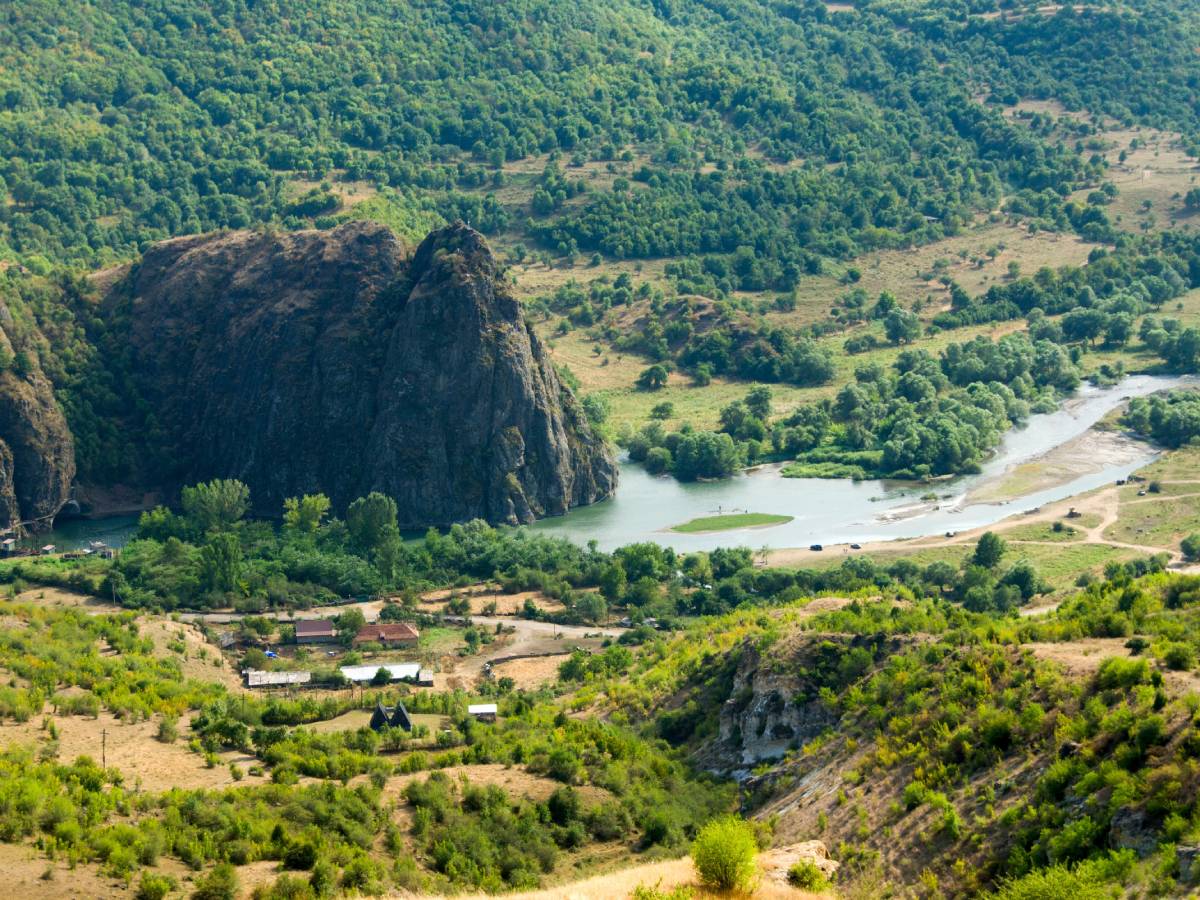
Travel through southern Armenia and the scenery around Sisian reveals a landscape shaped by mountains, deep gorges and volcanic rock. Just a few kilometres from the town, Shaki Waterfall brings a very different element into this rugged setting. The waterfall lies on the Shaki River, a tributary of the Vorotan, surrounded by rocky slopes and patches of greenery. After the wide-open landscapes around Sisian, arriving beside flowing water gives this corner of Syunik a noticeably different atmosphere.

Where Water Meets Volcanic Rock

Shaki Waterfall drops from a height of around 18 metres, with the water flowing over a broad ledge of dark volcanic rock. Instead of forming one narrow stream, it spreads across the basalt and falls in several sections into the gorge below. The geology is an important part of the view: dark rock forms the backdrop while trees and other vegetation grow close to the river. Depending on the season and water flow, the appearance of the waterfall can change, giving each visit a slightly different character.
Shaki Waterfall and green trees

Get Closer to the Waterfall

Part of the experience is getting close enough to hear and feel the water. From the parking area, a short rocky path leads towards the falls, with the sound becoming stronger as you approach. When the flow is high, fine spray reaches the rocks nearby and cools the air, particularly on warmer days. Once there, take your time. Find a viewpoint, photograph the cascade or simply spend a few quiet minutes beside the water before heading back.
arge Shaki waterfall in Armenia

Add Shaki to Your Journey Through Syunik

Shaki Waterfall is easy to combine with other places around Sisian. Zorats Karer is only a short distance away, so the two can comfortably be visited as part of the same route. Travelers continuing farther into Syunik can head towards Goris, Tatev and the Vorotan Gorge, turning a stop at Shaki into part of a wider journey through southern Armenia. You do not need to plan an entire day around the waterfall; allow some time for the walk and the scenery, then continue exploring the region.
large Shaki waterfall in Armenia
Ready to experience Shaki Waterfall for yourself?
Discover Shaki Waterfall and explore more of southern Armenia with Gavit Travel.

Jermuk Armenia’s Mountain Spa Destination

famous Jermuk resort town
Jermuk

Slow Down in Armenia’s Mountain Spa Town

What if, for a day or two, you could leave the noise and busy streets behind?

The road leads higher into the mountains, the air grows cooler, and the pace begins to change. Here, mineral water rises naturally from underground springs, forested slopes surround the town, and there is little reason to hurry.

This is Jermuk — Armenia’s mountain spa town.

Located in Vayots Dzor, Jermuk has a long tradition as a health and wellness destination and is known for its natural mineral waters. Visitors can taste warm mineral water at the town’s drinking gallery, walk towards the Arpa River Gorge and see Jermuk Waterfall.

But there is more to Jermuk than its spa tradition. Beyond the town centre, mountain scenery and walking routes invite you to spend more time outdoors and discover the quieter side of the region.

Wellness may have made Jermuk famous, but its setting is just as much a reason to come. Here, mineral water, mountain air and an unhurried pace are simply part of the experience.

Taste the Water That Made Jermuk Famous

Water is at the heart of Jermuk’s story. The town has been known for its mineral springs for centuries and became a major spa destination during the Soviet period. Today, mineral water remains part of the Jermuk experience, from wellness treatments to the bottled Jermuk water found across Armenia. One of the easiest places to experience this tradition is the Mineral Water Gallery in the center of town. Here, natural mineral water flows from five taps at different temperatures, starting at around 30°C. Visitors can taste the water directly from the source and see the colorful mineral deposits that have formed around the stone basins. In Jermuk, mineral water is not just something you buy in a bottle. It is part of the town’s history and identity.
Mineral hot water  editorial use

Follow the Water Beyond the Town

Water leads you to another of Jermuk’s highlights: Jermuk Waterfall. A short journey from the center brings you to the waterfall, where water flows down the rocky slope into the Arpa River Gorge from a height of around 70 metres. Its unusual shape has also given it the name “Mermaid’s Hair.” But the waterfall is only one reason to explore beyond the center. Natural hot springs can be found in the landscape around Jermuk, with some reached by hiking or an off-road journey. Hikers can also follow routes through the Arpa River area, including a longer trail toward Gndevank Monastery, a 10th-century monastery surrounded by mountain scenery. For a different experience, visit the Jermuk Art Gallery, a branch of the National Gallery of Armenia, where works by Armenian artists including Martiros Saryan, Vahram Gaifejian and Hakob Hakobyan are displayed.
Jermuk waterfall in  Vayots Dzor

Why Visit Jermuk?

Because not every day of a journey through Armenia needs to be about moving from one monument to the next. Jermuk gives you space to slow down. Start with warm mineral water in the town center, walk to the waterfall, spend time in the mountains or choose a spa experience. In the warmer months, Jermuk offers green landscapes, hiking and outdoor activities. In winter, snow covers the surrounding mountains while the mineral springs and wellness centers offer a completely different kind of escape. Jermuk also fits naturally into a journey through southern Armenia. Travelers can combine it with Areni and Noravank, or continue farther south toward Tatev.
Waterfall in Jermuk view
Ready to Discover Jermuk?

Taste the mineral water, explore the mountains and experience a slower side of Armenia.

Tsaghkadzor Ropeway

Ropeway in Tsakhadzor Armenia
Tsaghkadzor Ropeway

See Armenia from Above

You do not have to be a skier to enjoy the Tsaghkadzor Ropeway. The chairlift takes you up the eastern slope of Mount Teghenis, leaving the town behind as forests, mountains and wide landscapes open below you. The lift system runs between approximately 1,966 and 2,819 metres above sea level, offering a completely different view of Armenia’s mountain scenery. And the experience changes with the seasons. In winter, you travel above snowy slopes and forests; in the warmer months, the mountain turns green. On clear days, Mount Ararat can also be seen in the distance. Whether you come for winter sports, nature, photography or simply the ride itself, the ropeway is an easy way to experience Armenia from above.

From Olympic Training to a Mountain Resort

Tsaghkadzor has a long connection with winter sports. The ropeway has been operating since 1967, and during the Soviet period, Tsaghkadzor was used as a training base for the Soviet Olympic ski team. Today, the mountain welcomes everyone from experienced skiers to travelers trying winter sports for the first time. The chairlift provides access to slopes with different levels of difficulty, while ski and snowboard equipment can be rented locally and lessons are available for beginners. But you do not need to ski to enjoy the mountain. You can simply take the chairlift, spend time in the snow and enjoy the views. For European travelers, Tsaghkadzor offers a familiar mountain experience in a less familiar destination — winter sports surrounded by Armenian landscapes and culture.
winter Ropeway

A Mountain for Every Season

Winter transforms Mount Teghenis into Armenia’s best-known winter sports destination. Skiers and snowboarders head toward the higher slopes, while beginners can rent equipment and take lessons. Sledding and snowmobiling are also among the winter activities available in the resort area. But when the snow disappears, Tsaghkadzor offers a very different experience. Green mountain slopes and forests replace the winter scenery, and the chairlift becomes a simple way to enjoy fresh mountain air and open views. This makes the ropeway worth visiting in the warmer months too — active and snowy in winter, green and peaceful in summer.
Tsaghkadzor ropeway

Why Ride the Tsaghkadzor Ropeway?

Because the ropeway is not only a way to reach the ski slopes. The ride itself is part of the experience. You can reach high into the mountains without a difficult hike and see a side of Armenia that feels very different from its monasteries, ancient sites and historic cities. One day you can be exploring centuries-old cultural landmarks; the next, you can be sitting on a chairlift above the slopes of Mount Teghenis. That combination of mountains, outdoor experiences and Armenian culture makes Tsaghkadzor a memorable addition to a journey through Armenia.
Tsaghkadzor Ropeway in Armenia
Ready for Your Tsaghkadzor Adventure?

See Tsaghkadzor from above in every season. Explore and book your Armenia journey with Gavit Travel.

Tsaghkadzor A Destination for Every Season

nature tsaghkadzor
Tsaghkadzor

Escape to the Mountains

Just a short drive from Yerevan, Tsaghkadzor offers an easy escape into the mountains.  This is Tsaghkadzor, one of Armenia’s best-known mountain destinations and an easy escape from the capital. Located in Kotayk Province, the town sits on the slopes of Mount Teghenis and offers a different experience in every season. Winter brings snow, skiing and snowboarding, while the warmer months are a good time for mountain views, walks and outdoor activities. But you do not need to come with a long list of things to do. Part of Tsaghkadzor’s appeal is simply being in the mountains. Ride above the landscape, spend time outdoors, explore the town or stop for a meal with fresh mountain air around you. Whether you visit for an active day or a quieter break from Yerevan, Tsaghkadzor shows another side of Armenia.

See Tsaghkadzor From Above

One of the highlights of a visit is the Tsaghkadzor Ropeway, which climbs the slopes of Mount Teghenis. As the chairlift moves higher, the town gradually disappears below and wide mountain views open around you. In winter, the slopes are covered with snow. During the warmer months, the same journey reveals a greener landscape. The ropeway is not only for skiers. Visitors can take a ride simply to enjoy the scenery and mountain air, making it one of Tsaghkadzor’s most accessible experiences. In winter, the mountain becomes one of Armenia’s main areas for skiing and snowboarding, with equipment rental and lessons available locally. Outside the ski season, Tsaghkadzor remains a destination for outdoor activities and time in nature.
Tsaghkadzor Ropeway

More Than a Mountain Resort

There is more to Tsaghkadzor than the ropeway and ski slopes. Walking around town offers a quieter way to experience the destination, while the surrounding landscape gives visitors plenty of reasons to spend time outdoors. Depending on the season, a day here can combine mountain walks, activities, scenic views and time at local cafés and restaurants. Tsaghkadzor also has a historical side. Kecharis Monastery, located close to the town center, is a medieval complex whose main buildings date from the 11th to 13th centuries. It can be visited as a short cultural stop rather than the main focus of the day. This mix makes Tsaghkadzor easy to enjoy in your own way. You can make the day active, keep it relaxed or combine a little of both.
Teghenis Mountain in summer

Make It Part of Your Armenia Journey

Tsaghkadzor works well as a day trip from Yerevan, but its location also makes it easy to include in a longer journey through Armenia. Lake Sevan can be combined with Tsaghkadzor on the same route, giving travelers the chance to experience two very different Armenian landscapes in one trip. Come in winter for snow and skiing, or visit during the warmer months for mountain scenery, outdoor activities and fresh air. Either way, Tsaghkadzor offers a simple change of pace from Armenia’s cities and cultural landmarks.
Tsaghkadzor Ropeway nature
Ready to Discover Tsaghkadzor?

Enjoy the mountain views, explore the town and make Tsaghkadzor part of your Armenia journey with Gavit Travel.

Khor Virap Monastery

Khor Virap with Ararat mountain at background
Khor Virap Monastery

Where Armenia’s Christian Story Began

If there is one place in Armenia where history and the view of Mount Ararat come together, it is Khor Virap. Located not far from Yerevan, the monastery is known for much more than its spectacular view of Ararat. This is where one of the most famous stories in Armenia’s Christian history took place. According to Armenian Christian tradition, Gregory the Illuminator was imprisoned at Khor Virap for 13 years, before his release and the events that would later be connected with Armenia’s adoption of Christianity. Today, visitors can explore the monastery, climb down into the underground chamber associated with Gregory the Illuminator, and see Mount Ararat from one of Armenia’s most famous viewpoints.

The Story Behind the “Deep Pit”

The name Khor Virap means “deep pit” in Armenian, referring to the underground prison where Gregory the Illuminator was held by King Tiridates III. Gregory openly followed the Christian faith and refused to worship the pagan gods. As punishment, he was thrown into a deep pit near Artashat, the ancient capital of Armenia, where according to tradition he remained for 13 years. Years later, when King Tiridates became seriously ill, Gregory was brought out of the pit. According to Armenian Christian tradition, the king recovered, and Gregory went on to play a central role in Armenia’s conversion to Christianity, becoming the first head of the Armenian Church.
popular monastery of Khor Virap

Step Into the Story

One of the most memorable experiences at Khor Virap is hidden beneath the monastery itself. Inside the Church of St. Gregory, visitors can climb down a narrow metal ladder into the underground chamber traditionally associated with Gregory’s imprisonment. The entrance is small, the way down is steep, and the stone chamber below feels completely different from the open landscape outside. It is one thing to read about Gregory spending years underground. It is another to climb down into the place connected with that story. When you return to the surface, the contrast is remarkable: you step back into the open Ararat Valley with Mount Ararat rising on the horizon.
Sunrise over  Ararat and monastery

A Monastery in the Shadow of Ararat

Khor Virap is one of the most famous places in Armenia to see Mount Ararat. The monastery stands in the Ararat Valley, around 40 minutes by car from Yerevan. On clear days, the view of the monastery with Ararat behind it is one of the most recognizable images of Armenia. Its connection to Gregory the Illuminator, ancient Artashat and Armenia’s adoption of Christianity gives the place a much deeper meaning. For travelers heading south, Khor Virap is also a natural stop on the way to Areni, Noravank, Jermuk and Tatev, making it easy to combine the monastery with some of southern Armenia’s most remarkable destinations.
Ancient monastery Khor Virap
Ready to Discover Khor Virap?

Explore, plan and book your Armenia journey in one place with Gavit Travel.

Old Khndzoresk Cave Village

Old Khndzoresk bridge
Old Khndzoresk Cave Village

A Village Hidden in the Rocks

In southern Armenia, near the city of Goris, Old Khndzoresk reveals a very different side of the country. The former village lies on the sides of a deep gorge and is known for its many caves, which were once used as homes, storage spaces and shelters.

For generations, local people adapted their daily lives to this unusual landscape. Natural and man-made caves became part of the village, while stone buildings and narrow paths connected different parts of the settlement.

Khndzoresk remained inhabited until the middle of the 20th century, when residents gradually moved to the present-day village. Today, its empty caves, stone ruins, old churches and dramatic gorge preserve the traces of a community that once lived among these cliffs.

When a Cave Was Home

The caves are what make Old Khndzoresk so unusual. For generations, local families adapted these spaces for everyday life. Some caves were shaped or enlarged, while stone-built sections were added to others. Because the village spread across the steep sides of the gorge, homes were located at different heights and connected by paths and passages. And this was not a small settlement. By the beginning of the 20th century, Khndzoresk had grown into a large community with thousands of residents. Standing here today, it can be difficult to imagine these quiet cliffs filled with everyday village life. That contrast between the peaceful landscape you see now and the community that once lived here is part of what makes Old Khndzoresk so fascinating.
Khndzoresk Gorge (1)

160 Metres Across the Gorge

Today, one of the most memorable parts of visiting Old Khndzoresk is crossing its suspension bridge. Built in 2012, the pedestrian bridge stretches 160 metres across the gorge, rises about 63 metres above its lowest point and weighs approximately 14 tonnes. The bridge connects the two sides of the gorge and makes the historic cave settlement easier to explore. As you walk across, it gently moves beneath your feet while views of the cliffs, caves and deep gorge open around you. From the middle of the bridge, you can truly appreciate the scale of Old Khndzoresk. Cave openings appear across the slopes at different heights, showing just how closely the former village was connected to the landscape around it.
Southern Armenia

Walk Through the Story of Khndzoresk

Old Khndzoresk is more than a place to admire from a distance. Cross the suspension bridge, walk into the gorge and explore the paths between the caves to experience the former village up close. Located near Goris in Syunik Province, it offers something very different from Armenia’s famous monasteries and historic cities. Here, the landscape itself tells the story. You are not simply looking at the remains of an old village. You are walking through it.
160 Metre Suspension Bridge
Ready to experience Armenia?

Your Armenia journey starts here. Explore, plan, and book your entire trip in one place with Gavit Travel.

5 Mistakes to Avoid When Visiting Armenia

Visit Armenia
Before Your Trip to Armenia
Planning a trip to Armenia? A little preparation can make your journey much easier and help you experience more of what the country has to offer.
From getting around and paying for everyday purchases to exploring beyond Yerevan, here are five common travel mistakes worth avoiding before your trip.

What language is spoken in Armenia?

Armenian is the official language. English is also spoken in many hotels, restaurants, and tourist areas.

What currency is used in Armenia?

The local currency is the Armenian dram (AMD).

What is the best time to visit Armenia?

Spring and autumn are great for sightseeing, while summer is warm and winter is ideal for snow and skiing

Can I travel around Armenia without a car?

Yes, but some places are easier to reach by rental car, tour, or private transfer.

How many days do I need in Armenia?

About 5–7 days is a good start. You can explore Yerevan and visit several popular places outside the capital.

Do I need a visa to visit Armenia?

It depends on your nationality. Many travelers can visit Armenia without a visa for a limited period.

1. Taking a Random Taxi from the Airport

After a flight, getting to your hotel should be the easiest part of your journey. However, taking the first taxi you find outside the airport may mean paying more than expected or starting your trip with unnecessary confusion. Arranging your airport transfer in advance gives you a confirmed pick-up, a clear price, and peace of mind when you arrive. Instead of figuring out transportation after landing, you can simply meet your driver and begin your trip. Travel tip: Book your airport transfer before departure, especially if your flight arrives late at night or early in the morning.
Taxi rendom

2. Relying Only on Card Payments

Card payments are widely accepted in Yerevan, particularly in hotels, restaurants, supermarkets, and larger businesses. But once you explore smaller towns, local markets, family-run businesses, or more remote destinations, cash can still be useful. Keep some Armenian drams with you for smaller purchases and situations where card payment may not be available. Travel tip: You do not need to carry large amounts of cash. A combination of card and a reasonable amount of Armenian drams is usually the most practical option.
Card payment

3. Spending Your Entire Trip in Yerevan

Yerevan deserves time, but staying only in the capital means seeing just one side of Armenia. Travel beyond the city and the landscape changes quickly. Discover the blue waters of Lake Sevan, the forests around Dilijan, the mountain scenery of Tsaghkadzor, the ancient Temple of Garni and Geghard Monastery, or travel south to experience Tatev and the dramatic Vorotan Gorge. One of the advantages of visiting Armenia is that many remarkable places can be reached from Yerevan on day trips, while longer journeys reveal an entirely different side of the country. Travel tip: Combine a few days in Yerevan with several day trips or a short multi-day journey to experience Armenia more fully.
only in capital

4. Buying Bottled Water Everywhere

This is a small detail that surprises many visitors. Armenia has a long tradition of public drinking fountains known as pulpulaks, and you will see them throughout Yerevan and in many other parts of the country. Instead of buying a new plastic bottle every time you need water, carry a reusable bottle and refill it when appropriate. Beyond being practical, pulpulaks are also a small part of everyday Armenian life that visitors quickly begin to notice. Travel tip: Bring a reusable water bottle. It is convenient, saves money, and reduces unnecessary plastic waste.
drinking water fountains

5. Leaving Everything Until the Last Minute

Spontaneous travel can be fun, but some parts of your Armenia trip are better arranged in advance, particularly during the busier travel months. Popular hotels, guided tours, rental cars, airport transfers, and certain experiences may have limited availability. Planning the essentials before you arrive gives you more choice and leaves more time to actually enjoy your journey. You do not need to schedule every hour of your holiday. Book the important things first, then leave enough flexibility for unexpected discoveries along the way. Travel tip: Secure your accommodation, key tours, transfers, and rental car in advance, while keeping some free time in your itinerary. Travel Armenia Better Avoiding a few simple mistakes can make your trip to Armenia smoother, more comfortable, and much more rewarding. Plan the essentials, keep some flexibility, and make time to discover what lies beyond the capital. From ancient monasteries and mountain landscapes to local traditions and unforgettable food, Armenia has much more to experience than can fit into a single city.
Aerial view of the famous Garni temple
Ready to explore Armenia?

Discover trusted tours, hotels, transfers, car rentals, and memorable local experiences with Gavit Travel, all in one place.

Garni Temple and Symphony of Stones

Garni (1)
Garni Temple and Symphony of Stones

Where Ancient History Meets the Art of Nature

Just outside Yerevan, Garni brings together two completely different sides of Armenia — an extraordinary ancient monument and one of the country’s most unusual natural landscapes.
Standing above the dramatic Azat Gorge, the Temple of Garni takes you back to Armenia’s pre-Christian past. Continue down into the gorge and the scenery changes completely, revealing enormous basalt columns so
perfectly shaped that they almost look carved by hand.
Here, history and nature have created two masterpieces side by side.

Garni Temple: A Window into Armenia’s Pre-Christian Past

Long before Armenia became the world’s first country to adopt Christianity as a state religion, different beliefs, traditions and temples shaped life here. The Temple of Garni, traditionally dated to the 1st century AD, is the country’s most remarkable surviving monument from this pre-Christian period. With its classical columns, geometric proportions and dramatic position above the gorge, the temple feels strikingly different from the medieval monasteries found across Armenia. The temple is believed to have been dedicated to Mihr, the Armenian god of the sun, and formed part of a royal complex that once included a palace and baths. Today, Garni offers visitors a rare opportunity to discover another chapter of Armenia’s ancient history.
Garni Temple Historical Site

Symphony of Stones Where Nature Looks Like Architecture

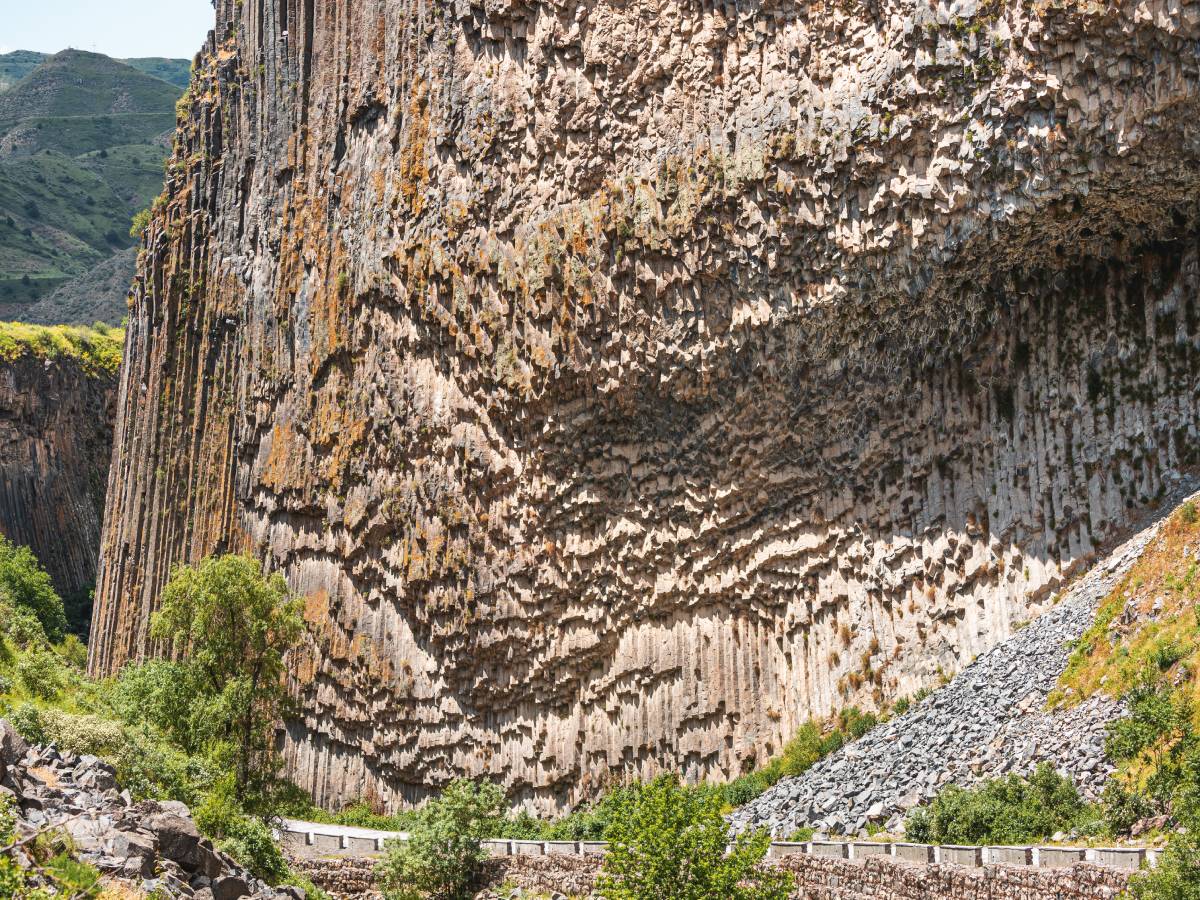
Descend into Garni Gorge and you’ll encounter one of Armenia’s most extraordinary geological formations. Towering basalt columns stretch along the cliffs above the Azat River, their remarkably regular shapes creating the impression of an enormous stone organ. It is easy to see how the formation earned its poetic name, the “Symphony of Stones.” These columns formed naturally as ancient lava flows cooled and contracted, gradually creating the geometric structures visible today. Standing beneath them, the landscape can feel almost unreal. No architect designed it. Nature did.
In Armenia Symphony of Stones

Feel the Spirit of Garni

Garni is an easy day trip from Yerevan, but it is a place worth taking time to explore. Visit the ancient temple, walk through the gorge to the Symphony of Stones, and add a taste of local life with traditional Armenian food or a lavash-baking experience in the village. With ancient stories, remarkable landscapes and traditions still part of everyday life, Garni offers much more than a quick stop outside the capital.
Ancient Garni Temple
Ready to discover Garni?
Turn this destination into your next unforgettable experience with Gavit Travel.

Armenia’s City of Art, History and Humor

Aerial viwq of Vardanants square
Gyumri

There is a side of Armenia you can only experience in Gyumri.

Black and red tuff buildings, old wooden balconies, cobbled streets and hidden courtyards give the city a character of its own. But what makes Gyumri memorable goes far beyond its architecture. Art, craftsmanship, humor and a strong sense of local identity are woven into everyday life here.

Once known as Alexandropol, Gyumri preserves one of Armenia’s most distinctive historic urban environments. Its 19th-century buildings now stand alongside museums, galleries, creative spaces and artisan workshops, creating a city where the past continues to feel very much alive.

Discover the Streets of Old Gyumri

In the historic Kumayri district, every street reveals another layer of the city’s past. Ornamental doors, carved stone facades, iron balconies and traditional courtyards still carry the character of old Alexandropol, a period that shaped much of Gyumri’s historic center. There is no need to rush from one landmark to another. Take your time, wander through the side streets and notice the details. In Gyumri, the streets themselves are part of the experience.
Gyumri Street

Where Craftsmanship Became Part of the City

Blacksmithing has left its mark on Gyumri for generations, shaping both the city’s appearance and its cultural identity. Look closely at the historic streets and you will find handcrafted iron gates, railings, doors and decorative details created through skills passed down by generations of local masters. In 2023, Gyumri’s blacksmithing tradition was inscribed on UNESCO’s Representative List of the Intangible Cultural Heritage of Humanity. Today, the craft remains alive in local workshops and in the ironwork that continues to give the historic center part of its unmistakable character.
Gyumri building

Experience Gyumri Beyond the Landmarks

Gyumri’s character comes to life through its landmarks, local flavors and everyday atmosphere. Visit the imposing 19th-century Black Fortress, step inside the Museum of Urban Life and National Architecture at the historic Dzitoghtsyan House, and spend time around Vardanants Square before exploring the city’s smaller museums, galleries and creative spaces. Food is another part of discovering Gyumri. Try Shirak specialties such as panr khash and sweet yaghli, then take time to enjoy the city at your own pace. From lively summer streets to atmospheric snow-covered winters, every season reveals a different side of Gyumri. With its historic streets, local traditions and distinctive atmosphere, Gyumri offers a different perspective on Armenia in every season.
Black fortress
Ready to discover Gyumri?
Plan your entire journey in one place with Gavit Travel.

A Natural Treasure of the Armenian Highlands

Lake sevan
Sevan
High in the Armenian mountains lies Lake Sevan, one of the country’s most iconic natural landmarks. At around 1,900 metres above sea level, its vast blue waters are surrounded by mountain ranges, open landscapes and centuries of history.

Often called the “Pearl of Armenia,” Sevan is the largest lake in Armenia and the South Caucasus, forming the heart of Sevan National Park.

Discover Sevan's Protected Natural World

Sevan National Park protects the lake’s unique high-altitude ecosystem and surrounding landscapes. The lake and its wider basin provide habitats for endemic plants, fish and other wildlife, while also serving as an important refuge and stopover for waterbirds. More than 250 bird species have been recorded in the surrounding area, including the Armenian gull, and Lake Sevan plays an important role along migratory routes. This rich natural diversity makes Sevan much more than a beautiful place to admire the view.
Sevan Shore

Sevanavank: History, Nature and Endless Views

Rising above the lake on the Sevan Peninsula, Sevanavank Monastery is one of Sevan's most recognizable landmarks. The monastery, mountain scenery and sweeping views across the water create one of the most memorable panoramas in Armenia — bringing nature and Armenian heritage together in one place.
Sevan Sevanavank

Experience Sevan Your Way

Lake Sevan is more than a destination. With its vast blue waters, mountain landscapes and centuries of history, every visit offers a new way to experience one of Armenia’s most remarkable places.
Sevanavank girl discovers
Ready to explore Armenia?

There’s so much more waiting to be discovered. Plan your journey and book your Armenia experience in one place with Gavit Travel.

Warenkorb